

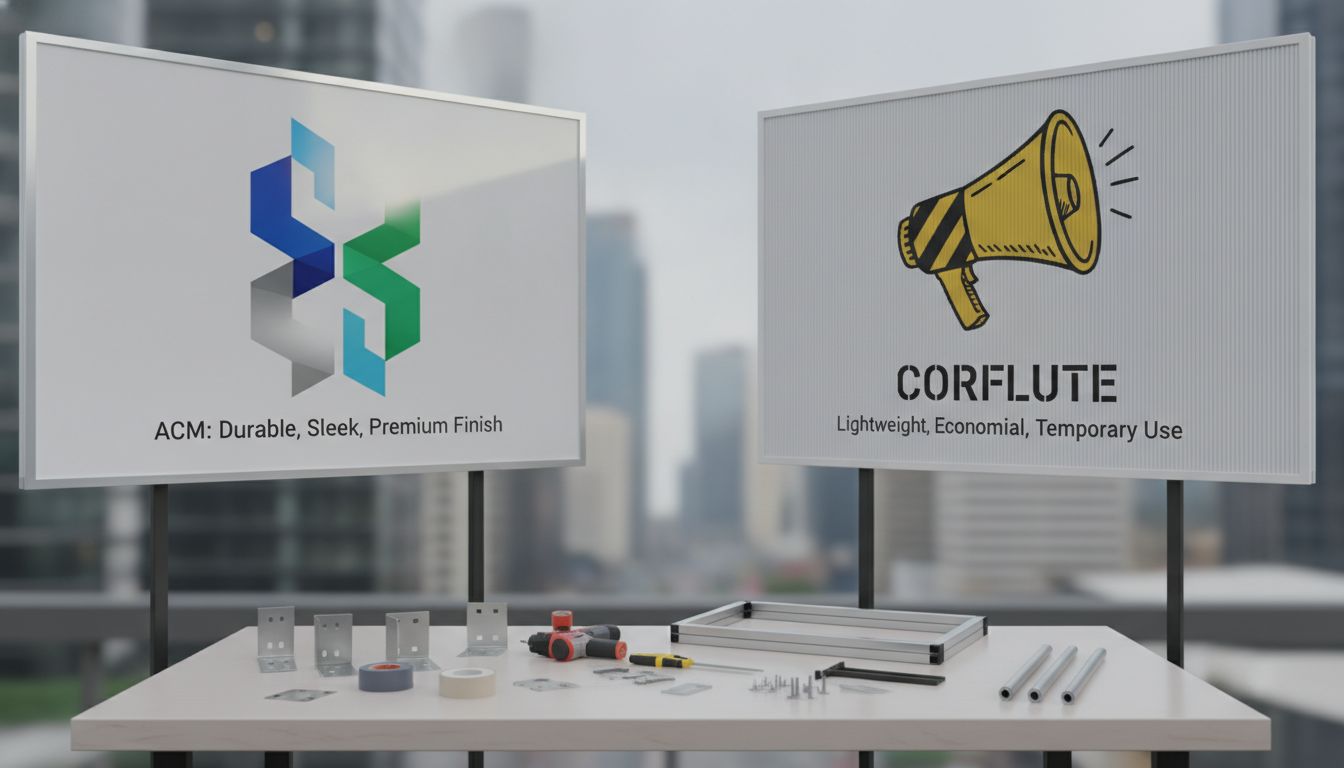
To pick the right material for your signage, you need to know how ACM signage and corflute signs differ. Each one does a different job. Each can also shape how well people see your brand and how much they trust it. Whether you run a business, handle marketing or work in a trade, it pays to choose with care.
Corflute is light and stands up to the weather. It suits temporary displays and lasts around 1 to 2 years outdoors. ACM is a rigid aluminium composite panel built to last. It suits permanent signage and can last between 5 to 15 years.
Choosing between them can feel like choosing between a shopfront built to last and a banner for a single weekend event. The right choice comes down to how long you need the sign, your budget and what you will use it for. In this guide, we look at the real differences so you can decide with confidence. We cover everything from how long each lasts to how it looks, so your Melbourne business stands out.
Understanding ACM Signage
ACM signage, or Aluminium Composite Material signage, is a popular choice for businesses that want to be seen. The way it is built and the way it looks make it one of the top outdoor signage materials.
What is ACM?
ACM is made of two thin aluminium sheets bonded to a core that is not aluminium, usually polyethylene. This makes a light but strong panel that stays flat and does not warp. It comes in many finishes, such as matt, satin or gloss, and colours like brushed steel, gold and mirror. You can tailor ACM panels to suit any brand.
Key Features of ACM
- Durability: ACM panels are built to stand up to harsh weather, so they work well both indoors and outdoors.
- Lightweight: The mix of aluminium and polyethylene makes the panels light to handle and install.
- High-Quality Finish: The smooth surface takes crisp, bright graphics that help your brand stand out.
- Versatile Sizes: ACM panels come in sizes up to 1500x3600mm to suit many kinds of signs.
Applications in Business
ACM signage is used in many business settings. For example, you might see it on shopfronts in St Kilda or as wayfinding directories in corporate offices in Brighton. Here are some common uses:
| Application | Description | Benefits |
|---|---|---|
| Building Fascias | Gives a business location its identity. | High-quality finish that stands out in any setting. |
| Wayfinding Directories | Helps visitors find their way around complex sites. | Clear graphics that people can read at a glance. |
| Corporate Branding | Used in offices for a professional look. | Gives your brand the same look at every site. |
| Shopfront Signage | Draws in customers and makes your brand more visible. | Tough and weather-resistant, so it keeps looking good for years. |
At Signage Melbourne, we recommend ACM for businesses that need a permanent, high-quality finish. It stands up to Melbourne's changeable weather, from summer UV to winter rain, so your signage stays bright and intact over time. Whether you want to lift your shopfront or need signs for corporate branding, ACM panels are a smart investment that signals stability and trust.
Understanding Corflute Signage
If you need affordable signage at short notice, Corflute is a flexible choice. It is popular in Melbourne because it is light and waterproof, which makes it right for many uses.
What is Corflute?
Corflute is a type of corrugated polypropylene, often called plastic cardboard. Hollow flutes give it strength while keeping it light. It usually comes in thicknesses from 3mm to 8mm, and 5mm is the most common. With sheet sizes up to 1220x2700mm, Corflute suits many signage needs.
Key Features of Corflute
Corflute has several features that make it a favourite for temporary signage:
- Lightweight: Light to carry and install, so it suits setups at short notice.
- Waterproof: Stands up to rain, so your signage stays intact in wet weather.
- Cost-effective: A low-cost option for businesses on a budget.
- Durable: It lasts 1-2 years outdoors, but it can last many years indoors.
Common Uses of Corflute
Corflute signage is common in many sectors:
| Application | Description | Typical Duration |
|---|---|---|
| Events | Directional signs and promotional displays | Temporary |
| Real Estate | Open home signs and property listings | 1-2 years |
| Construction Sites | Safety boards and site rules | 1-2 years |
At Signage Melbourne, we supply corflute signs made for construction sites, real estate campaigns and temporary events across Melbourne, Geelong and the Western Suburbs. Our full-colour digital prints often come with a whiteboard finish, so site managers can update them as needed.
Comparing the Durability of ACM vs Corflute
Choosing the right outdoor signage materials means looking closely at how well they hold up. Melbourne weather can change fast, so your signage must stand up to the elements. Let's look at how ACM and Corflute signage handle weather and wear and tear.
Weather Resistance
ACM signage stands out for how well it resists weather. The rigid aluminium skin does not rust, and the panel stays flat even when temperatures swing. This makes it ideal for places like Elwood and St Kilda, where salty air and strong sun can ruin weaker materials. “ACM panels are built for this,” we often say, as they still look like new after years outdoors.
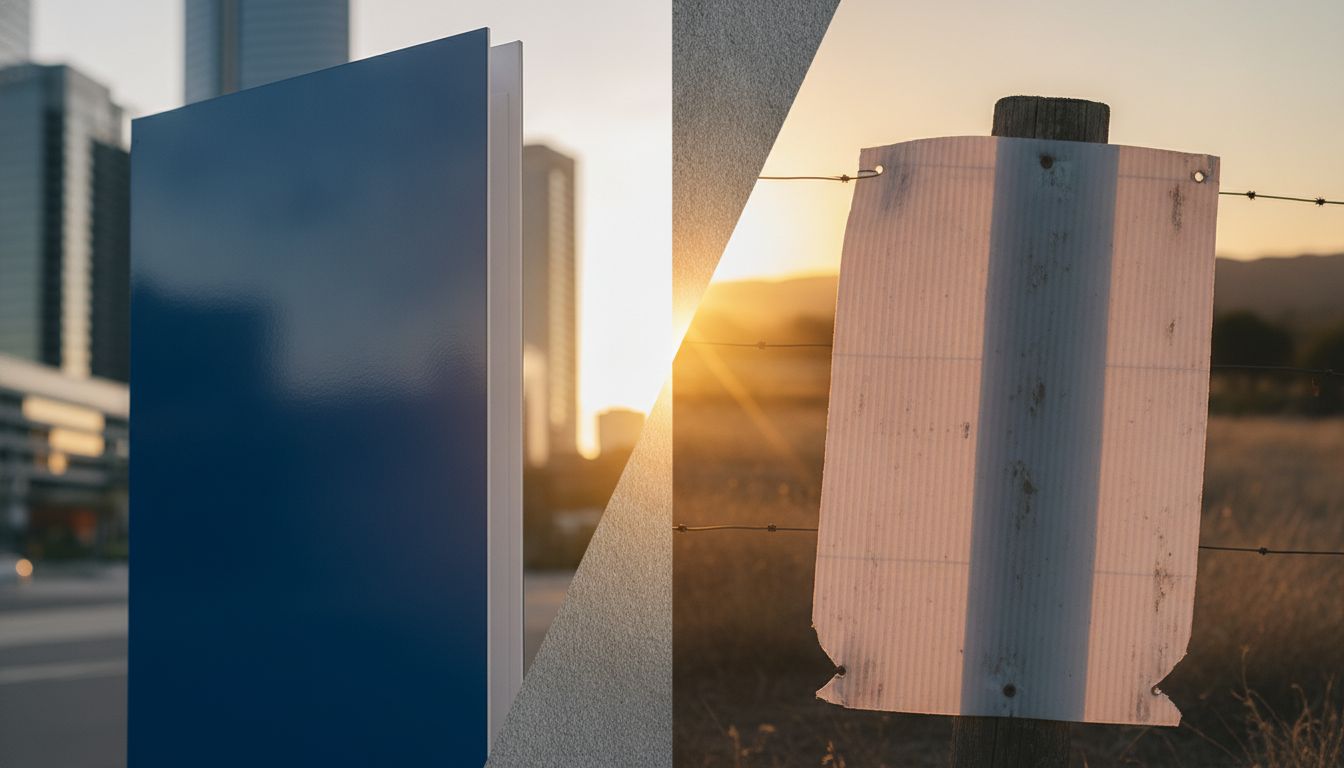
Corflute, on the other hand, is waterproof, so it won't soak up water in heavy rain. But long exposure to UV rays can make the polypropylene brittle. If it is not fixed firmly, a strong gust of wind can tear a Corflute sign right off its mount. For temporary use, Corflute is a practical choice. For anything permanent, nothing matches the durability of ACM.
Wear and Tear
When it comes to wear and tear, ACM signage shines. It resists corrosion and holds together well over time. We've installed ACM signage in coastal areas that still looks great after five years. Corflute, by contrast, may break down within 1-2 years outdoors, especially in exposed spots.
When we look at your site, we check things like wind exposure and which way the sun hits. This way, you don’t end up with a damaged sign after the first storm. In the end, choosing ACM over Corflute can save you time and money over the long run.
Cost Analysis: ACM vs Corflute
A careful cost comparison of ACM and corflute signage can help you find the best investment for your business. Knowing what each option costs over time helps you make a sound choice that fits your budget and brand goals.
When you compare signage, the upfront cost often gets the most attention. Corflute signs cost little upfront, so they suit short-term campaigns on a budget. ACM panels usually cost more, often double the price of corflute. But that first price can mislead you if you only think short term.
Over time, the value of ACM panels becomes clear. Corflute may look like the cheaper choice today, but you might end up replacing a corflute sign every 1 to 2 years. Those replacements can cost more than a single ACM sign over five years. Also think about the hidden labour costs to install and remove signs, which can add up fast.
To show the difference, we’ve put together a table comparing the costs of ACM panels and corflute signs over a typical five-year period:
| Signage Type | Initial Cost (AUD) | Replacement Frequency | Total Cost Over 5 Years (AUD) |
|---|---|---|---|
| ACM Panels | 600 | Every 10-15 years | 600 |
| Corflute Signs | 300 | Every 1-2 years | 900 - 1,500 |
As you can see, ACM panels cost more upfront but save you a lot over time. Money aside, think about how signage shapes the way people see your brand. A faded, curling corflute sign can suggest you cut corners. A well-kept ACM sign tells people you are professional and here to stay.
At Signage Melbourne, we see signage as an investment, not just a purchase. We help you weigh these choices with clear quotes for design, production and installation across all our service areas. Let us run the numbers with you. We will compare the total cost of ownership so you can choose a sign that fits your budget and lifts your brand.
Visual Appeal: ACM vs Corflute
The look of your signage can strengthen your brand's presence and help people remember you. To choose between ACM and Corflute signage, you need to know how each one prints and how far you can tailor it. Each material has its own traits that can shape how your business looks.
Print Quality
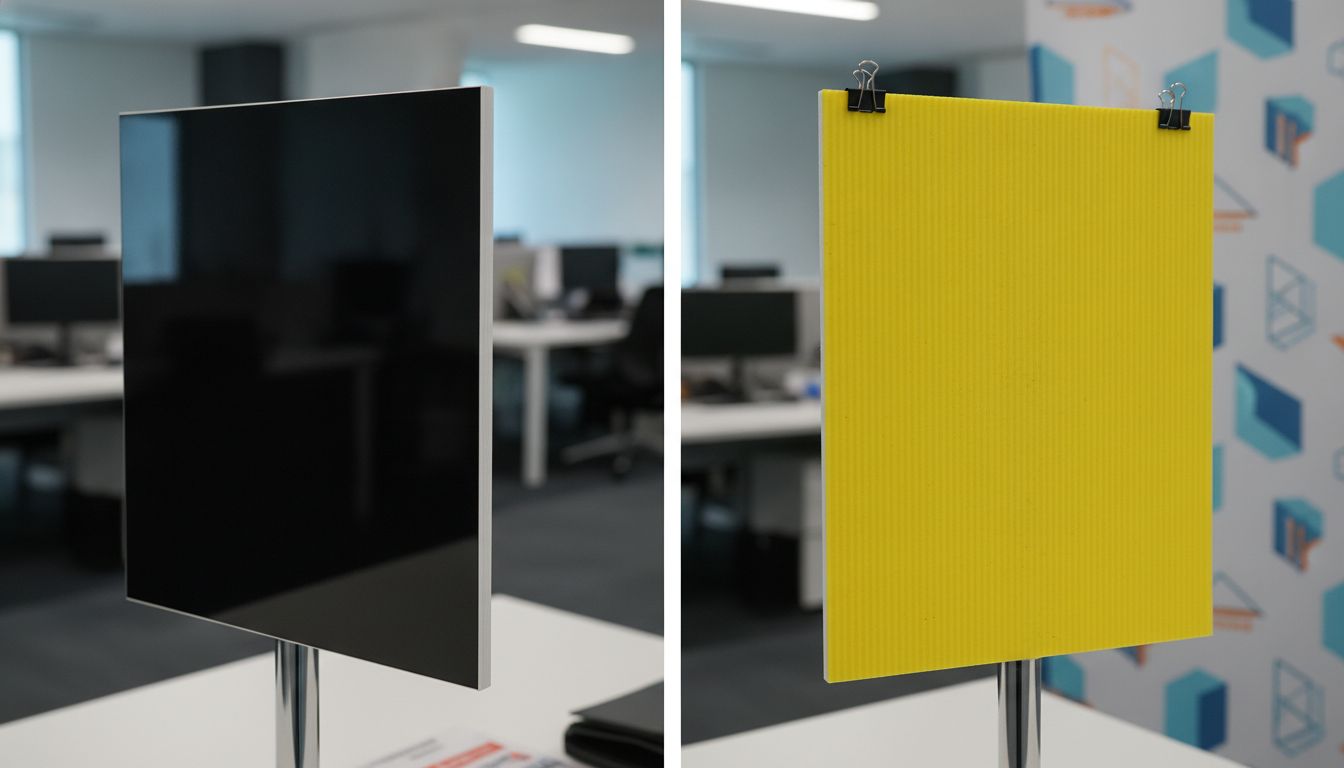
ACM signage has a perfectly flat, smooth surface that takes sharp, high-resolution digital printing. The ink bonds well, which gives bright colours and crisp edges. It comes in several finishes: matt, satin, gloss and even speciality finishes like brushed metal. This makes ACM ideal for shop signage in image-conscious areas like Brighton and St Kilda.
Corflute, on the other hand, has a ribbed texture you can see up close. It prints well, but not as crisply as ACM. Corflute can be printed in full colour or have cut vinyl applied, and it can even be finished with whiteboard film. This makes it suitable for temporary signage, such as construction site signs or real estate pointers.
Customisation Options
When it comes to customising, both ACM and Corflute can be cut to shape. ACM goes further, as it can be bent or routed for dimensional effects and a more refined look. At Signage Melbourne, we help you choose the right material and finish so your signage reflects the quality of your business.
Whether you need a temporary sale banner or a permanent building sign, we make sure your signage meets your needs. Here’s a side-by-side comparison of the two materials:
| Feature | ACM Signage | Corflute Signage |
|---|---|---|
| Best Use | Premium branding and shopfronts | Temporary signage and construction sites |
| Customisation | Bendable, routable for effects | Cut to shape only |
| Finish Options | Matt, satin, gloss, brushed metal | Full colour, cut vinyl, whiteboard film |
| Print Quality | High-resolution, sharp edges | Good quality, ribbed texture |
Installation Process for ACM Signage
To get a professional look, ACM signage installation takes precision and skill. The job needs the right tools and a well-organised team. Knowing what is involved can make a big difference to how your signage project turns out.
Tools Required
When you install ACM panels, the right tools matter. Here’s a list of the tools you'll need:
- Level
- Drill
- Wall anchors or standoffs
- Scissor lift (for high installations)
These tools make sure the panels are mounted securely and look professional. At Signage Melbourne, our team carries the latest tools to handle all kinds of installation challenges.
Labour Involved
Installing ACM signage is usually a two-person job, especially for larger panels. Our experienced team handles everything, from checking the substrate to choosing fixings that won’t corrode. This is vital if you want your signage to last.
Here’s a short outline of the installation process:
- Check the surface (brick, render, metal cladding).
- Choose the right fixings for the substrate.
- Mount the ACM panels using the chosen method (standoffs, drilling or adhesive).
- Make sure everything is level and secure.
When you trust Signage Melbourne with your signage installation in Melbourne, you get our commitment to quality and to meeting local rules. We handle tricky access sites, including Richmond laneways and multi-storey buildings in the CBD, and make sure the installation goes smoothly.
| Aspect | Details | Importance |
|---|---|---|
| Installation Methods | Drilling, adhesive, standoffs | Depends on the surface type |
| Labour | Two-person team | Makes the job safer and faster |
| Tools | Level, drill, standoffs | Keeps the installation precise |
Installation Process for Corflute Signage
Installing corflute signage takes far less work. This light material is flexible to handle, which makes it ideal for many uses, including construction sites and event setups.
You can install corflute signs with basic tools, so anyone can do it. Here’s an overview of the tools you’ll need:
Tools Required
- Craft knife
- Cable ties
- Screws with washers
- Adhesive tape
These tools let you attach corflute signage to scaffolding, star pickets or even windows without fuss. For example, a site manager can zip-tie a safety sign to scaffolding in just a few minutes. This speed helps on time-sensitive projects, such as those Signage Melbourne handles across Melbourne, Geelong and the Western Suburbs.
Labour Comparison
One big advantage of corflute signage is how little labour it takes to install. Often, one person can set up small to medium-sized signs. This cuts costs and speeds up the job. Installing ACM signage, by contrast, usually takes more labour and time.
Here’s a comparison of the labour needed for corflute versus ACM signage:
| Signage Type | Labour Requirement | Installation Time |
|---|---|---|
| ACM Signs | Higher (2+ people) | Longer (hours) |
| Corflute Signs | Minimal (1 person) | Short (minutes) |
In windy areas like Geelong, we make sure the fixings are right so your signage can't become a projectile. This care makes corflute a reliable option for construction signage materials.
"Corflute goes up with basic tools and little labour, which makes it a go-to choice for businesses that need effective signage fast."
At Signage Melbourne, we take pride in producing and installing corflute signage fast when you need it urgently, whether for election campaigns or sudden sales. We help you get the most from your signage projects without cutting corners on quality.
Lifespan of ACM vs Corflute
Knowing how long your signage will last can have a big effect on your investment. Lifespan is not just about durability. It also affects maintenance costs and how often you need to replace signs. Let's take a closer look at how long ACM and corflute signage usually last.
Typical Lifespan of ACM
ACM signage usually lasts 5 to 7 years outdoors. In ideal conditions, though, many ACM signs can last up to 10 to 15 years. The aluminium skin shields the polyethylene core from UV damage, a common problem for outdoor signage.
Typical Lifespan of Corflute
Corflute signage, by contrast, usually has a much shorter life. Outdoors, it lasts about 1 to 2 years before it starts to break down, turning brittle and faded. Indoors, though, Corflute can last for many years, so it suits temporary displays like point-of-sale signage.
Here’s a side-by-side look at how long both materials last:
| Signage Type | Outdoor Lifespan | Indoor Lifespan |
|---|---|---|
| Corflute Signage | 1-2 years | Many years |
| ACM Signage | 5-7 years (up to 15 years) | 10-15 years |
At Signage Melbourne, we know how much it matters to choose signage based on how long it needs to last. If you are planning a long-term project, ACM is the clear winner. For temporary needs, like construction hoardings, corflute is a practical choice. We help you make informed choices that fit your business goals and budget.
Environmental Impact: ACM vs Corflute
As more businesses focus on sustainability, you can't ignore the environmental impact of ACM and Corflute signage. Choosing the right outdoor signage materials means knowing how recyclable they are and how big their environmental footprint is.
ACM panels can be hard to recycle. The aluminium and polyethylene layers are bonded together, so they are hard to separate. Some specialist recyclers can manage it, though. And because ACM lasts so long, it creates less waste over time.
Corflute, on the other hand, is made from polypropylene, classed as plastic #5, which is technically recyclable. Yet many facilities won't take it because inks and adhesives contaminate it. As a result, a large share of Corflute signage ends up in landfill. And because Corflute signs are replaced more often, they can add more waste overall.
Think about it this way: one ACM sign that lasts ten years makes far less total waste than several rounds of Corflute. This makes ACM the more resource-efficient choice for businesses that want to cut their environmental impact.
At Signage Melbourne, we encourage clients to think about the full life of their signage. If you are using Corflute for a short campaign, we can suggest take-back options where possible. For permanent signage, ACM’s long life is naturally the better fit for sustainable practice.
“We’re not here to greenwash. Both materials have an environmental footprint, but we’ll give you the honest facts so your signage fits your values.”
Best Practices for Choosing the Right Signage
Choosing the right signage means weighing up several factors. The right material is not about what’s popular. It’s about what suits your situation best. At Signage Melbourne, we guide you through this process step by step.
Start by asking yourself a few key questions:
- How long will this sign be on display?
- Where will it be installed?
- What impression do I want to make?
If you’re a builder in the Western Suburbs who needs site signage for a 12-month project, corflute signs are a practical, cost-effective choice. But if you’re a retailer in Elwood fitting out a permanent storefront, ACM signage will give you better long-term value.
Assessing Your Needs
Think about how long your signage needs to last. For temporary needs under two years, Corflute is ideal. For permanent branding, ACM gives a better return on investment (ROI). Also think about location: indoors or outdoors, sun exposure and wind. These factors can have a big effect on how long your signage lasts.
Budget Considerations
Your budget should cover more than production. Include installation and any replacement cycles. We suggest you look at your total budget in full, so you don't overspend on temporary signs or underspend on permanent ones.
At Signage Melbourne, we offer free consultations to Melbourne businesses. We’ll help you look at site conditions, timelines and brand needs before we recommend the best option, be it ACM or corflute. Our goal is to make sure you get a sign that works as hard as you do.
“Choosing the right signage is about knowing your own needs and making informed choices.”
Trends in Signage: ACM and Corflute
Signage is changing fast, and ACM and corflute are out in front with new ideas. As Melbourne businesses look for modern options, these materials are changing to meet today's needs.
ACM signage has seen several notable advances. Fire-rated cores are now available, which help you meet building regulations. This matters most in Melbourne's CBD. Ultra-matt finishes have also arrived, cutting glare and making signs easier to see in glass-heavy spaces. Coatings made for digital print have improved too, giving sharper graphics and better ink adhesion.
Innovations in ACM
- Fire-rated cores: Vital for meeting safety rules.
- Ultra-matt finishes: Minimise glare in bright settings.
- Enhanced print coatings: Give bright, long-lasting graphics.
Corflute signage is also changing a lot. Makers now produce UV-stabilised grades that stretch outdoor life to 2-3 years. This makes corflute more reliable outdoors. Whiteboard laminates are also becoming standard, giving a reusable surface ideal for construction sites that need daily updates.
Innovations in Corflute
- UV-stabilised formulations: Help it last longer outdoors.
- Whiteboard finishes: Let you update signs as often as you need.
- Printable surfaces: Work with latex and UV inks.
Both ACM and corflute are also moving towards eco-friendly versions. Recycled-content cores and biodegradable options are not yet mainstream, but the industry is clearly pushing for sustainability.
At Signage Melbourne, we make sure what we offer keeps up with these advances. You might need a sleek ACM sign for your Richmond office or reusable corflute signs for an event. Either way, we offer the latest options to suit your needs.
| Material | Key Innovations | Benefits |
|---|---|---|
| Both | Eco-friendly options | Sustainability focus |
| Corflute | UV-stabilised grades, whiteboard laminates | Longer life, reusable |
| ACM | Fire-rated cores, ultra-matt finishes | Compliance, less glare |
Conclusion: Making the Right Choice
Choosing between ACM and corflute signage matters for your business's image and results. Each material has its own job. ACM is ideal for long-term branding, giving a polished look that lasts between 5 to 15 years. It resists weather, so it suits outdoor signage that must stand up to the elements.
Corflute, on the other hand, is a cost-effective choice for short-term needs. It works well for temporary signage, such as real estate boards or event promotions. If your project is short-lived, corflute is a smart choice that won't break the bank.
As you weigh your options, think about your timeline, budget and the message you want to send. Investing in ACM can save you money over time if you need signage that lasts. For short campaigns, corflute does the job without extra cost.
At Signage Melbourne, we understand the finer points of ACM vs. Corflute signage. We guide you through the choice so you pick the right material for your needs. Our team handles everything from design to installation, so the process runs smoothly. Contact us for a quote on ACM or corflute signage. We serve all Melbourne suburbs, including Geelong, Dandenong, Elwood, Brighton, Richmond, St Kilda and the Western Suburbs. Let’s create signage that lifts your business.