


When they put up new signage, many Melbourne business owners ask a key question: will you need some form of council approval? In most cases, the answer is yes. But the exact rules depend on several factors. These include the type, size and location of your sign, as well as local regulations.
Working through signage regulations can feel overwhelming. But it doesn’t have to be. At Signage Melbourne, we guide you through each step. As a Melbourne signage company, we offer end-to-end services. We cover the first consultation and design through to production, installation and ongoing support. That way, your signage is compliant from day one.
In this article, we walk you through the rules, the application process and the factors that affect approval. We also show you how to avoid costly mistakes. You need to know the difference between exempt development and full assessment. Smaller signs may not need formal approval if they meet certain criteria. Larger shopfront signage, illuminated signs and signs projecting over public land usually do.
With our help, you can find your way through the signage rules with confidence and make informed choices for your business.
Understanding Signage Regulations
Knowing the signage regulations is vital if you want to comply and advertise well. Local councils and state planning policies set these regulations. They control which signs you can display, where they go, how big they are and whether they can be illuminated. In Melbourne, every business owner needs to know these rules.
Signage regulations do several jobs:
- Keep streetscapes looking good
- Keep the public safe
- Prevent visual clutter
- Protect heritage areas
Each council in Melbourne, whether in Boroondara, Port Phillip, Yarra or Maribyrnong, has its own requirements on top of state-level planning provisions. Knowing these council signage rules is not just about avoiding fines. It’s about protecting your investment. A council can order a non-compliant sign removed at your expense, and you may face penalties.
Regulations cover many aspects of signage, including:
| Sign Type | Max Allowed | Approval Needed |
|---|---|---|
| Footway Signs | Limited to 1 per business | Yes |
| Window Signs | Varies by size | May require approval |
| Awnings and Under-Awning Signs | Varies by council | Yes |
| Business Identification Signs | 3 for a single tenant, 6 total | Depends on design |
These regulations matter a great deal. They keep competition fair and protect the character of Melbourne's iconic shopping strips and commercial precincts. They also keep pedestrians and drivers safe. At Signage Melbourne, we help you work through these regulations so your signage is compliant and effective.
Types of Signage Requiring Approval
Every business owner should know which types of signage need council approval. Different signage types have different rules. Knowing them can save you time and money.
Permanent vs. Temporary Signage
Permanent signage covers signs that are meant to stay in place for a long time. Examples of permanent signage that usually need business sign approval include:
- Shopfront fascia signs
- Pylon signs
- Projecting signs
- Wall signs
These signs usually need a full development application or a self-assessment against council criteria.
Temporary signage, on the other hand, often has more relaxed rules, but it still comes with strict conditions. For example, a business promotion sign is a temporary advertisement for auctions, sales or promotions. To be self-assessable, it must:
- Have a maximum area of 4 m²
- Be displayed only on the property where the activity is taking place
- Do not use electronic displays
- Be up for no more than 14 days within any 90 days
Directional and Informational Signs
Directional and informational signs, such as those that say "Entrance," "Exit" or "Parking," usually face lighter rules. These signs must:
- Not exceed a maximum area of 2 m²
- Not block traffic signs or create safety hazards
These signs are less likely to need council signage rules compliance. Even so, you still need to place them with care so they do their job without causing confusion.
For example, a retail shop in Elwood may need a new fascia sign above its awning. A construction company in Dandenong might need site signage. Each case has a different approval pathway, so it is vital to know the local rules.
Some signs are banned outright, such as standing vehicle signs and high-impact electronic billboards in certain locations. You need to know what is allowed before you invest in design and production. At Signage Melbourne, we guide you through this check. We make sure your signage type fits what your local council permits.
The Application Process for Signage
Getting business sign approval starts with a clear picture of the application process. The process may seem daunting, but with the right guidance you can get through it smoothly. Here’s a step-by-step guide to help you.
Steps to Apply for Council Approval
To give your application for a planning permit for signage the best chance, follow these steps:
- Before You Apply: If you plan to apply for several devices, you can lodge one application for all devices on a single property. Or you can submit a package for several devices on a large development, or separate applications for different properties.
- Prepare Supporting Documents: Gather accurate site plans that show where existing structures and the proposed signage are. Include design and construction details, such as photos or drawings that show size and shape. If you are not the landowner, get their consent.
- Understand Your Fees: Know the application fee and the annual permit fee for each device. Fees can vary a lot with the type of sign and how complex it is.
- Submit Your Application: Fill in the online form from your local council.
- After You Apply: Expect a first response within 30 working days. This gives the council time to review your application in full.
Required Documentation
When you apply for signage approval, make sure you include the following documents:
- Accurate site plans
- Design drawings with dimensions and materials
- Photos of the existing site
- Written consent from the property owner (if applicable)
- Extra technical standards documents for illuminated or electronic signs
At Signage Melbourne, we handle the whole signage process, from consultation and concept to design, production, installation and support. We know Melbourne councils well, so we can spot likely issues before they cause delays. This helps your application go smoothly.

Factors Influencing Council Approval
Several key factors decide whether the council will approve your signage application. Knowing them can greatly improve your chances of getting the approvals you need for compliant signage.
Sign Size and Dimensions
The size and dimensions of your sign are key to approval. Councils set strict limits on sign size compared with the building facade, awning or window area. For example:
- An awning fascia sign must fit within the fascia's outline and cannot be more than 600mm in height.
- A window sign should cover no more than 25% of the glass area and must not be bigger than 2 m².
- Footway signs can be no more than 1m high, 0.6m wide and 0.6m deep. They must also leave a clear pedestrian corridor of at least 2m.
Location and Visibility Concerns
Location plays a big role in signage approval. Where your sign sits in relation to public land, roads and footpaths matters a great deal. Any sign projecting over a public road or footpath needs separate approval under the Roads Act. These clearances are usually required:
| Sign Type | Minimum Clearance |
|---|---|
| Footway Signs | 450mm from the kerb |
| Flexible Signs | 2.1 metres |
| Rigid Signs | 2.4 metres |
Design and Aesthetic Guidelines
Design and looks matter most in areas with heritage overlays and character precincts. Councils check whether your proposed signage suits the building's architecture and respects the visual rhythm of the streetscape. Key points include:
- Use of the right materials and colours.
- How well the sign fits with existing structures and surroundings.
- Meeting local design guidelines.
At Signage Melbourne, we take all these factors into account when we design signage. Our goal is signage that looks good and meets regulatory requirements. This gives you a better chance of smooth shopfront signage approval.
Commonly Approved Sign Types
Knowing which types of signage councils often approve can make planning smoother for you. It helps you make informed choices about your signage needs. Below, we outline the main types of signs that usually get through the approval process without trouble.
Business Name Signs
Under the Business Name Registration Act 2011, businesses must display their registered name at all public trading locations. This matters for openness and trust with customers. Business name signs are basic. When they stay within standard dimensions, they usually follow a well-established approval pathway.
For home businesses operating under the Home Business Code, a small, non-illuminated sign of up to 0.6 m² is generally self-assessable. This means you won’t need a formal planning permit for signage as long as you meet certain criteria. One example is making sure the sign is not freestanding or attached to a wall or fence.
Real Estate Signs
Real estate signs are classed as self-assessable advertising devices. They are made to be displayed on the property being marketed, which makes approval far less involved. As a real estate agent, this means you can promote properties without working through complex council approvals.
These signs are practical and vital for visibility in the competitive real estate market. Follow local guidelines to make sure you comply and avoid problems.
Event and Promotion Signs
Event and promotion signs give you flexibility for temporary advertising campaigns. You can display a promotional sign up to 4 m² for a maximum of 14 days within any 90 days without needing approval. This is most useful for businesses running auctions, sales or other promotional events.
To comply, remember that these signs must be displayed only on the property where the activity is happening. They should not use electronic displays. Also, only one business promotion sign is allowed per street frontage, so plan for that.
These sign types are usually approved, but always check your local council's planning scheme and any overlays that may affect your property. At Signage Melbourne, we specialise in helping you work out which category your proposed signage falls into. We tell you whether you can go ahead under self-assessment or whether you need to lodge a formal application.
We have worked across many kinds of commercial areas in Melbourne. They range from the lively retail strips of St Kilda to the busy corporate precincts of Richmond. So we are well placed to advise you on which signage options are likely to succeed.
Penalties for Unauthorized Signage
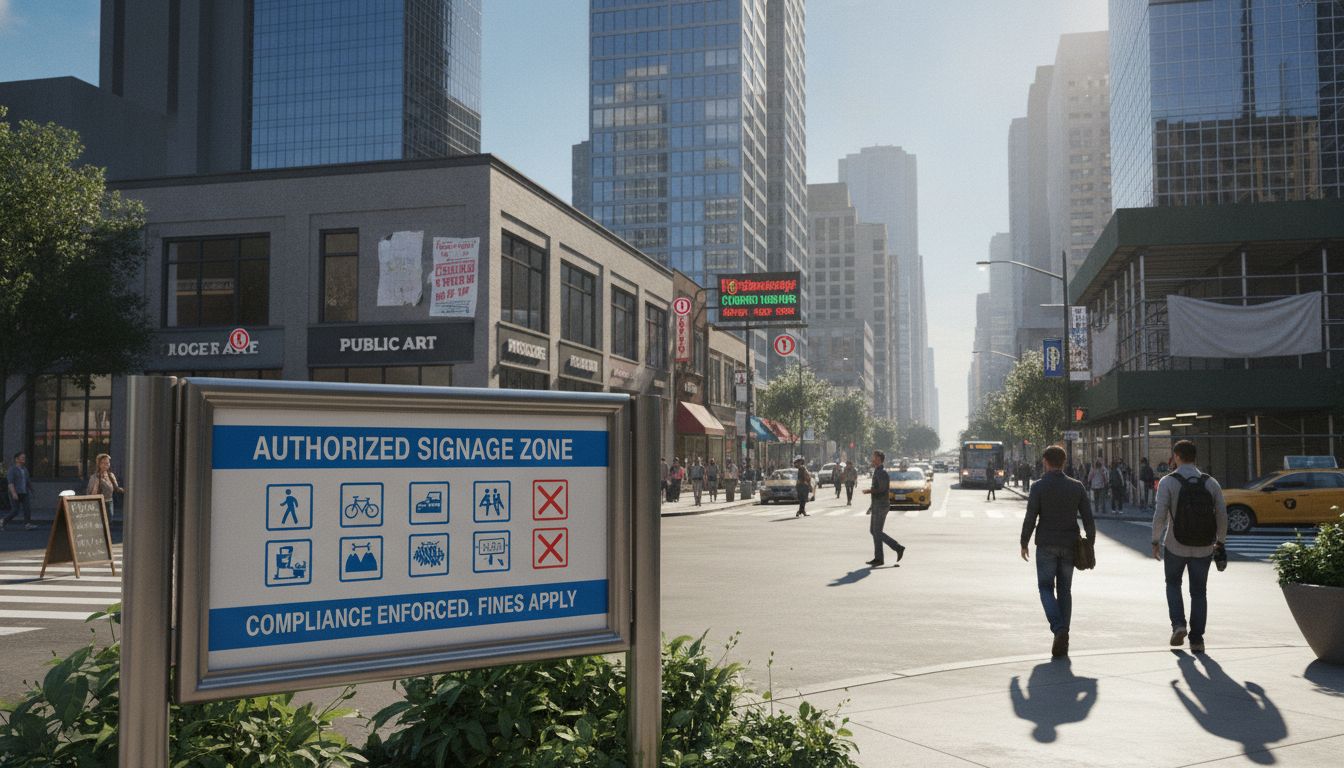
Putting up signage without proper approval can have serious consequences. Knowing the possible penalties can spur business owners to follow council signage rules. In this section, we look at the fines, the legal consequences and why compliant signage matters.
Fines and Penalties Explained
Fines for unauthorised signage vary a lot, depending on the council and the specific breach. In general, penalties can range from several hundred to several thousand dollars per sign. Councils can also issue compliance orders that make you remove or change non-compliant signage at your own expense. This cost can often be more than what you first paid for the signage.
For example, prohibited devices such as inflatable signs, bunting or high-impact electronic billboards in restricted areas face even harsher penalties. These signs cannot be approved under any circumstances, so the financial risk is higher. It's vital to know these risks so you avoid unexpected costs.
Potential Legal Consequences
The fallout from unauthorised signage goes beyond fines. If your sign intrudes on public land without approval, you may face more penalties from transport authorities. And if your business is on a heritage-listed property, unauthorised signage can trigger enforcement action from both local and state government bodies.
If you do not comply with signage regulations, it can damage your business's reputation. It may disrupt your operations if the signage must come down, and it can delay your marketing. So it is vital to get compliant signage from the start.
At Signage Melbourne, we take pride in designing, producing and installing compliant signage that meets all council requirements. Our team checks the council signage rules thoroughly before fabrication begins. So you never face the stress and cost of fixing unauthorised work.
| Type of Violation | Typical Fine Range | Legal Consequences |
|---|---|---|
| Encroachment on Public Land | $1,500 - $3,000 | More penalties from transport authorities |
| Prohibited Devices | $1,000 - $5,000 | Severe penalties, potential legal action |
| Unauthorized Signage | $500 - $2,000 | Compliance orders, removal costs |
Appeal Process for Denied Applications
If your signage application has been refused, don't lose hope. You can appeal. Knowing how the appeal process works can help you get the shopfront signage approval you want. Most councils offer formal ways to appeal, usually through the Victorian Civil and Administrative Tribunal (VCAT) or through internal council reviews.
The first step in an appeal is to find out why your application was refused. Common issues include:
- Exceeding size limits
- Being out of character with the streetscape
- Creating safety concerns
- Conflicting with heritage overlays
How to Submit an Appeal
Once you know why it was refused, you can start preparing your appeal. In general, you have 60 days from the decision date to lodge your appeal with VCAT. The documents you need include:
- Your original application
- The refusal notice
- Any new evidence or changed designs that deal with the council's concerns
Make sure you submit your appeal within the set timeframe, so you don't miss your chance to have your application looked at again.
Tips for a Successful Appeal
To improve your chances of a successful appeal, try these tips:
- Bring in a signage professional who can offer other design options. These should meet the council's objections while still meeting your business goals.
- Include visual impact assessments or streetscape analyses to back up your case.
- Show how your revised proposal fits the planning scheme's objectives.
Sometimes, amending your application with changed designs can work better than a formal appeal. Councils allow amendments to existing approvals. But major changes to built form, or electronic displays over 4 m², need a new application.
At Signage Melbourne, we support you through the whole signage journey. That includes working through council processes and dealing with any problems that come up with applications. We know Melbourne councils well, so we can find solutions that get your shopfront signage approval over the line.
| Action | Timeframe | Required Documents |
|---|---|---|
| Extension Request | Up to 6 months | Application for extension, fee payment |
| Amend Application | 15 business days before expiry | Changed designs, reasons for the changes |
| Submit Appeal | 60 days from denial | Original application, refusal notice, new evidence |
Best Practices for Signage Design
Effective signage needs a balance between creative expression and meeting local guidelines. When you design signage, think about the character of your local area. This helps your signage connect with the community while following council regulations.
Consider Local Aesthetics
You need to understand the architectural style around you. For example, a modern sign may look out of place on a heritage building. In Melbourne, councils look closely at whether signage respects the look of the local area. Signs should suit the building's era and keep the visual rhythm of the streetscape.
Here are some key aspects to consider:
- Use materials that suit the building's character.
- Choose colour palettes that blend with the surroundings.
- Make sure the design does not overpower the architecture around it.
Ensure Sign Readability
Your sign's main job is to get your message across. A beautiful sign that is hard to read is a wasted investment. Here are practical tips to make your sign more readable:
- Choose the right font size for the viewing distance.
- Keep high contrast between text and background.
- Think about how illumination affects visibility by day and by night.
Also, keep your signs clean and well maintained. Signs must be structurally adequate and comply with the Building Code of Australia. They should never hide official traffic signs or create hazards for users.
At Signage Melbourne, we build these best practices in from the first concept. Our design process looks at site analysis, council requirements and your business needs. The result is compliant signage that stands out for all the right reasons.
| Design Element | Considerations | Impact on Signage |
|---|---|---|
| Font Size | Size based on distance | Easier to read |
| Colour | Palette matching local aesthetics | Improves visual appeal |
| Materials | Local building materials | Fits in better with the surroundings |
The Role of the Community in Signage Approval
The community plays a key role in signage approval. When councils assess signage applications, they look at how the proposed signs will affect the local area and community. This is especially true for prominent shopfronts and large commercial signage.
Many Melbourne councils have formal ways for the community to give feedback. During the public notification period for a planning permit, neighbouring property owners and residents can lodge objections or comments on your proposed signage. This feedback can have a big effect on the council's decision.
Community Feedback Mechanisms
Knowing how to respond to community feedback is key to getting signage approved. Valid concerns from residents, such as light spill from illuminated signs or visual bulk, can sway council decisions. So keep these community factors in mind when you design your signage.
Impact of Local Culture on Signage
Local culture also plays a big role in signage approval. Each Melbourne suburb has its own character and expectations. For example, a bold, modern sign may be welcome on Richmond's lively commercial strips. A more conservative design might suit Brighton's heritage-conscious streets better.
Areas with strong artistic communities, like St Kilda or Fitzroy, may welcome creative and unusual signage. Corporate precincts, by contrast, often expect a more restrained, professional look. Knowing these cultural differences helps you design signage that the community warms to.
At Signage Melbourne, we use our deep knowledge of Melbourne's many suburbs to guide you through these complexities. We help you work within the council signage rules while creating a sign your community welcomes rather than resents.
| Suburb | Signage Style | Community Expectation |
|---|---|---|
| Fitzroy | Eclectic and Bold | Innovative and Trendy |
| St Kilda | Creative and Unconventional | Artistic and Unique |
| Brighton | Conservative and Heritage | Traditional and Subdued |
| Richmond | Bold and Contemporary | Vibrant and Eye-Catching |
Resources for Council Approval Information
When you work through signage permits in Melbourne, the right resources can make a big difference. Start with online government portals that give key information about local council regulations. These portals often give access to planning schemes, property zoning maps and the application forms you need for compliant signage.
Each Melbourne council, including the City of Port Phillip and Greater Dandenong, has its own online resources. These can help you understand the specific requirements for signage installation in your area. For more personal help, think about booking a pre-lodgement meeting with council planning officers. This informal talk can find possible issues early and may save you time and money.
Local experts can also help you understand the signage approval process. Professionals who specialise in signage permits can point out common pitfalls and ways to succeed. At Signage Melbourne, we are committed to making this journey smoother for you. We handle everything from consultation and design to signage installation across Melbourne.
Our experienced team makes sure your signage meets all the regulations it needs to, so you can focus on your business. Contact us today for a consultation. Let us help you create compliant signage that makes an impact and lifts your brand.