

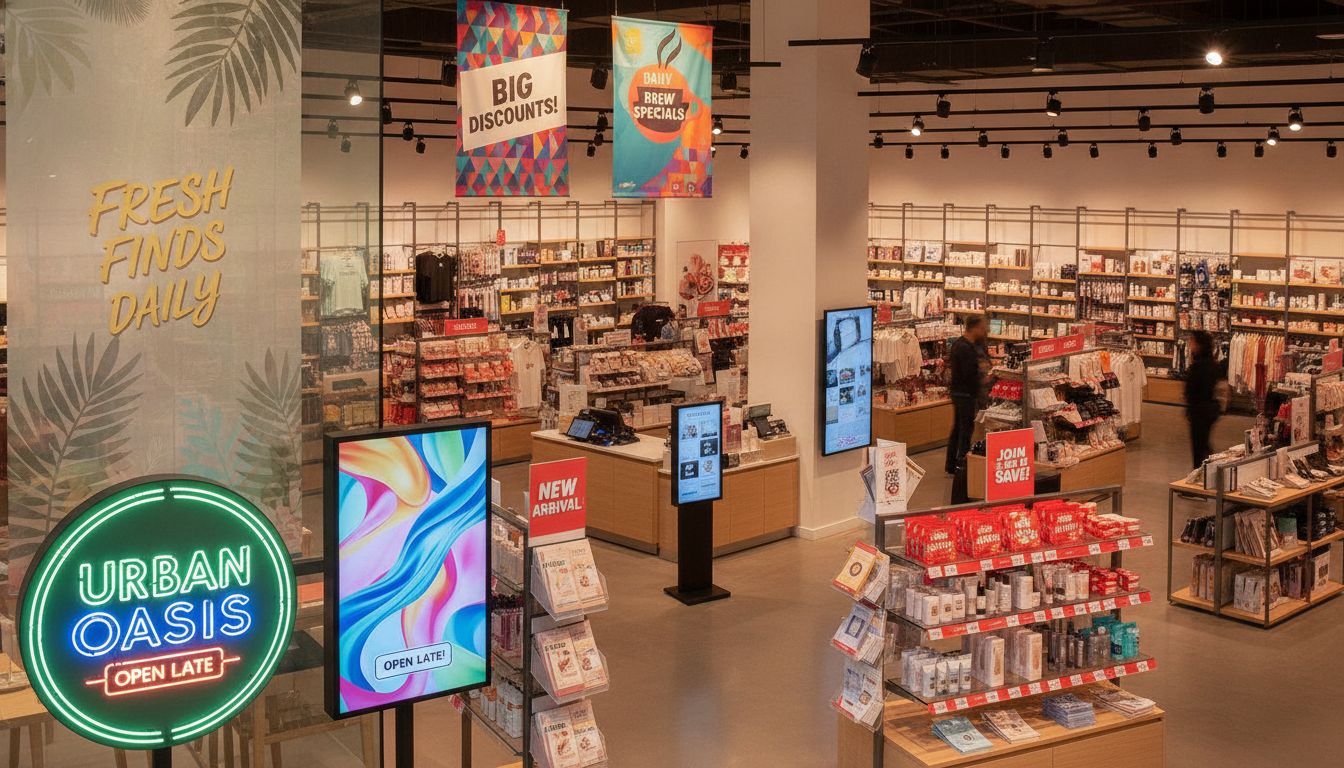
When you want to draw in customers, the right signage is vital for any business. Effective shop signage sets you apart from rivals. It also helps you build a brand people remember. In busy Melbourne, where so many shops compete for attention, your signage needs to stand out.
But there's no one-size-fits-all answer. The best signage for your business depends on many factors, including your type of shop, location, target audience and budget. From lightbox signs to digital displays, the options are wide and varied.
At Signage Melbourne, we specialise in retail signage services from start to finish. We guide you through the whole process, from first advice and design to production and installation. Our know-how helps Melbourne retailers make informed choices without the guesswork.
In this article, we look at different signage types and what makes them work. You'll learn how to choose the right materials and meet the rules. You'll also learn how to make your business more visible and more profitable.
Understanding the Importance of Retail Store Signage
Retail store signage is more than decoration. It is a vital tool for talking to customers and building your brand. In busy shopping strips like Chapel Street and Bridge Road, good signage grabs attention and shapes what customers do. When retailers know why shop signage matters, they can be more visible and drive sales.
In a crowded market, signage plays a key role in setting your store apart. Here’s why it matters:
Why Signage Matters for Retailers
- Attracts Customers: Eye-catching signage draws people into your store.
- Conveys Brand Identity: Signage shows your brand's message and values, even before customers walk in.
- Increases Foot Traffic: Good signage can bring a big rise in foot traffic. Over 67% of customers base their buying decisions on visual displays.
- Guides Navigation: Clear signage helps customers find their way around your store, which makes shopping better for them.
Signage is not just a practical need. It’s a strategic investment that can lead to more sales and more engaged customers.
The Psychological Impact of Signage
Knowing how signage affects people's minds can help retailers design better displays. The right mix of colour, typography and placement can have a big effect on customer mood and choices. For instance:
- Colour: Different colours stir up different feelings. For example, red can create urgency, while blue builds trust.
- Typography: The font you choose can look professional or playful, which affects how customers see your brand.
- Placement: Signs placed at eye level are more likely to catch attention.
Well-designed shop signage builds trust and makes first-time customers feel less unsure. It gives a sense of professionalism that sets established retailers apart from pop-up rivals. In short, investing in quality signage is investing in your brand's future.
Types of Retail Store Signage
The right signage can transform your retail space. It makes the store more inviting and easier to find your way around. Knowing the different types of retail signage is vital if you want your store to be more visible and give customers a better experience. Below, we look at the four main types of retail signage.
In-Store Signage
In-store signage is vital for guiding customers through your store and making their visit better. This type includes:
- Wayfinding Signs: Help customers find certain areas or products.
- Promotional Displays: Point out special offers and discounts.
- Shelf Talkers: Give product details right where people buy.
- Point-of-Sale Signage: Has a direct effect on what customers decide at the checkout.
Exterior Signage
Exterior signage is the first impression customers have of your business. It includes:
- Shopfront Signs: Key for making your brand visible.
- Lightbox Signs: Give you a strong presence on the street, above all at night.
- Channel Letters: Give a modern look.
- Pylon Signs: Good for catching attention from a distance.
Digital Signage
Digital signage does many jobs, from showing your opening hours to promoting offers. Examples include:
- LED Displays: Bright, moving and eye-catching.
- Interactive Kiosks: Engage customers and give them information.
- Digital Menu Boards: Used well by brands like McDonald's to speed up service.
Temporary Signage
Temporary signage is versatile and ideal for seasonal promotions. It includes:
- Sandwich Boards: Easy to move and change.
- Window Decals: Perfect for advertising sales or events.
- Pop-Up Displays: Great for special occasions or promotions.
In Melbourne, businesses can choose from many materials, like acrylic, metal and timber, to suit their setting. That ranges from heritage shopfronts in Elwood to modern retail spaces in the Western Suburbs. Signage Melbourne designs, makes and installs all major types of retail signage across Melbourne suburbs, so you find the perfect fit for your business.
| Signage Type | Purpose | Material Options |
|---|---|---|
| Temporary Signage | Promotes sales and events | Vinyl, Coroplast, A-Frame |
| Digital Signage | Engages customers with content that changes | LED, LCD, Digital Displays |
| Exterior Signage | Draws attention and builds brand identity | Metal, Wood, Lightbox |
| In-Store Signage | Guides and informs customers | Acrylic, Cardboard, Vinyl |
Designing Effective Signage
The art of signage design is to balance good looks with good function. To make signs that catch attention and also get the message across, think about these key design points.
Choosing the Right Fonts and Colours
When you choose fonts and colours for your shopfront signs, put readability first. If customers cannot read your text fast, they may lose interest and walk away. Here are some tips:
- Opt for clear fonts: Avoid small or fussy scripts that are hard to read.
- Emphasise colour contrasts: Strong contrast between text and background makes signs easier to see, above all in Melbourne's changing light.
- Limit font styles: Use one or two font styles to keep a clean, professional look.
The Role of Images and Graphics
Images and graphics play a vital role in making your signs work. They can get a message across fast and in an attractive way. Here’s how to use them well:
- Use high-quality visuals: Make sure product photos and brand images are clear and professional.
- Avoid clutter: Balance promotional messages with a clear view into your store, above all on window graphics.
- Provocative designs: Create graphics that make people curious without overwhelming them.
Placement and Visibility Considerations
Where you place your signs is vital for how well they can be seen. Think about these factors:
- Sight lines: Make sure your signs sit in the direct line of sight for customers.
- Mounting height: Place signs at the right height so they can be seen as much as possible.
- Account for obstacles: Watch out for awnings, street trees and nearby signs that could block the view.
At Signage Melbourne, our design team handles everything from concept to finished artwork. That way your retail signage is both striking to look at and practical for your Melbourne location.
“Good design is not just about looking attractive. It’s about being seen, read and understood in the few seconds a potential customer takes to walk or drive past.”
Enhancing Customer Experience with Signage
Good signage transforms the shopping journey, making it smoother and more enjoyable for customers. In a retail setting, the right signage guides shoppers and also improves their whole experience. If you focus on signs that guide, promote and inform, you can create a space that invites people to explore and engage.
Navigational Signage
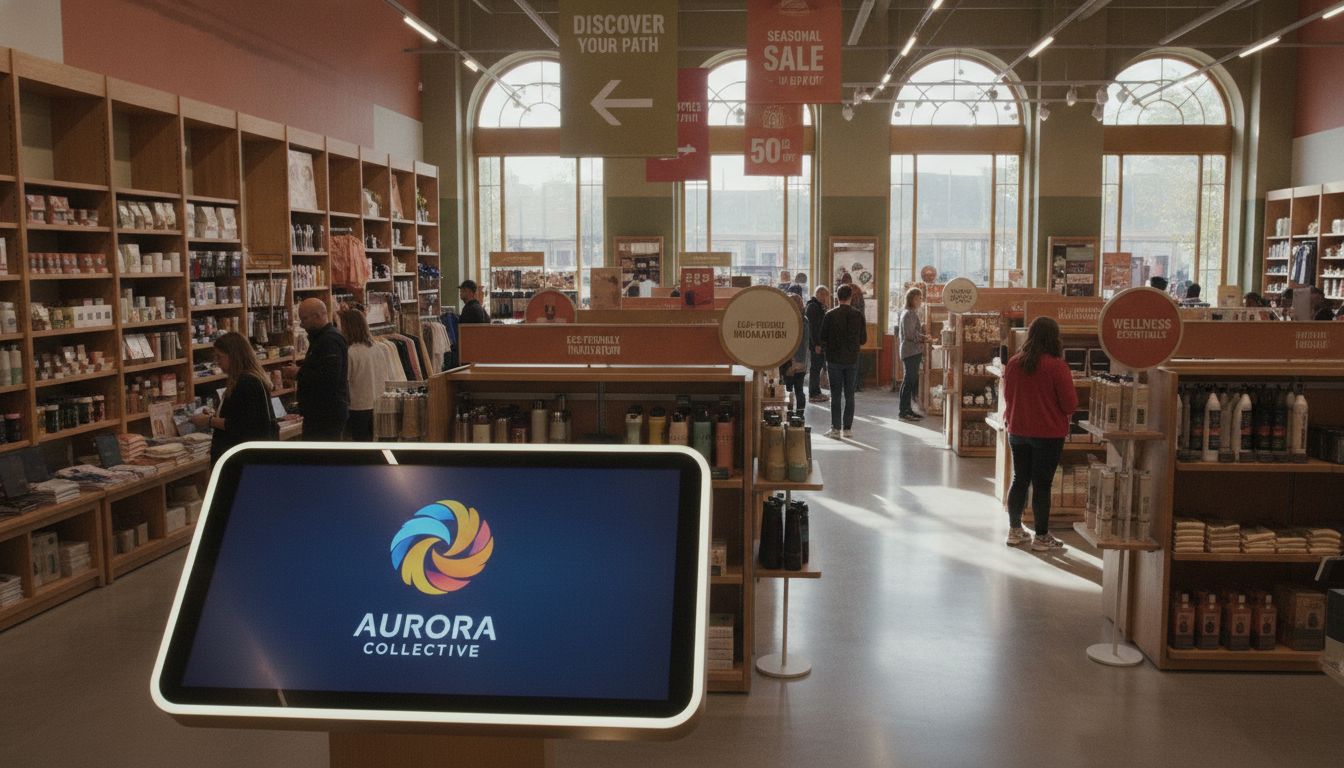
Navigational signage is vital for helping customers find their way around your store. It includes wayfinding systems that direct shoppers to departments, fitting rooms and checkouts. In larger retail spaces, such as shopping centres like Chadstone or Highpoint, clear directional signs cut frustration and keep people in the store longer.
Promotional Signage
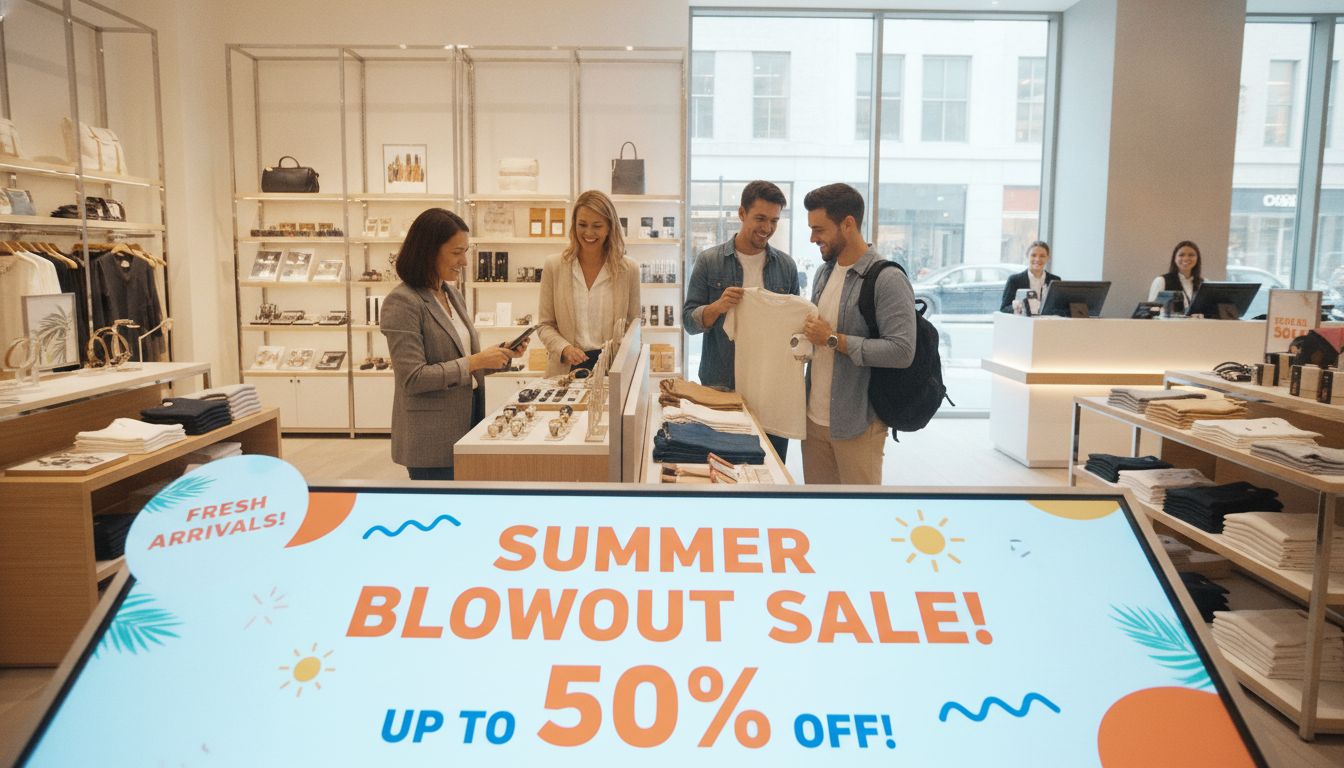
Promotional signage is a powerful tool for driving sales. Sales displays, new arrival notices and impulse-buy prompts near the checkout can have a big effect on what people buy. Window graphics can also promote current offers while still letting natural light into the store. This double role helps your store be seen and keeps it inviting.
Informational Signage
Informational signage plays a vital role in helping customers buy with confidence. This includes product description panels, price displays and size guides. When you give people the key facts, they can browse on their own and rely less on your staff.
Brands like Aritaum have made good use of digital skincare bars and QR codes to give instant product details. Self-service kiosks, like those at Decathlon, improve the shopping experience further. They let customers browse and order when it suits them.
In short, good in-store signage does not just decorate. It actively improves the shopping experience and lifts sales. As we at Signage Melbourne say,
"Signage is the silent salesperson that guides customers through their journey."
We help you create wayfinding and in-store signage that works and improves the customer journey across Melbourne.
The Role of Branding in Signage
Branding plays a key role in how customers see your business. Every sign you display stands for your brand. That runs from the bold lightbox signage above your entrance to the subtle vinyl decals in your store. A strong brand that looks the same everywhere draws in customers. It also builds loyalty and recognition.
With signage, it is vital to keep every type the same in look. That means your colour palette, typography and logo placement should match. A unified approach builds brand recognition. It helps customers spot your business wherever they come across your signs.
Consistency Across All Signage Types
To create one unified brand experience, think about these elements:
- Colour Palette: Use the same colours on all your signs to create a look people know.
- Typography: Choose fonts that show your brand's personality, and use them every time.
- Logo Placement: Put your logo in a prominent spot, so it is easy to see and remember.
- Material Finishes: Choose materials that match your brand values, whether that means eco-friendly options or luxury finishes.
For franchise businesses in Melbourne, sticking to these brand standards is vital. Each site should show the overall brand while adapting to its own setting. This balance gives customers the same experience, no matter which store they visit.
Integrating Brand Identity into Signage
Turning your brand values into signage choices can make a big impact. For instance:
- A sustainable fashion boutique might choose reclaimed timber and low-energy LED lighting.
- A high-end jeweller may choose polished metal and acrylic with precise, understated lighting.
Lightbox signage can work very well here. Adding your brand colours and logo creates a striking presence, above all at night. This helps you be seen, and it also builds recognition over time, so your brand stands out in a crowded market.
Keep in mind that signage is more than just a name. It shows what your business stands for. When you build your brand identity into every sign, you share your values and connect with customers on a deeper level.
Local Regulations and Compliance
Retailers need to know the local rules to make sure their signage complies with the law. In Melbourne, each local council has its own planning scheme that controls signage. From the City of Melbourne to areas like Bayside, Yarra, Stonnington and Greater Geelong, knowing the rules that apply is vital for your business.
With signage, there are key compliance areas that retailers need to understand:
- Maximum Size and Projection Limits: Each council sets the maximum size for fascia signage. This makes sure it fits the look and function rules of the area.
- Illumination Restrictions: In heritage overlays, there are strict rules on how signs can be lit, to protect the character of the area.
- Planning vs. Building Permits: Knowing when you need a planning permit and when you need a building permit is vital to avoid delays.
- VicRoads Regulations: If your signage can be seen from major roads, you must follow VicRoads rules.
A common mistake is installing signage without approval, above all in heritage precincts like Elwood or Brighton. This can lead to costly orders to fix the problem, which can disrupt your business.
Permits and Regulations You Need to Know
Getting permits can be complex, but we are here to help. Signage Melbourne works through local council rules for retail signage and handles permit applications as part of our full service. Here’s a practical overview of the application process:
| Step | Description | Timeframe |
|---|---|---|
| 4 | Receive permit approval | Varies |
| 3 | Work with council officers | Ongoing |
| 2 | Prepare permit documents | 2 weeks |
| 1 | Check site limits and signage needs | 1 week |
When you let us manage the complex parts, you can focus on running your business. With the right partner, meeting local signage rules is not an obstacle. It is a step in the signage process that can be managed.
Cost Considerations for Retail Signage
Knowing the costs of retail signage is vital for business success. As a retailer, investing in quality signage can make your brand more visible and draw more customers. But it’s vital to budget with care, so you get the most from your investment.
When you budget for signage, think about these factors:
- Material choice (e.g., acrylic, metal, timber)
- Size and scale of the signage
- Lighting needs
- How complex the installation is
- Permits and regulations
Budgeting for Signage
Think of signage as a capital investment rather than just a cost. For instance, a durable metal sign may cost more upfront. But it lasts, and it can save you money over time compared with cheaper options that need replacing often. This way of thinking can have a big effect on your total marketing budget.
Plan your spending wisely. Spend more on high-impact exterior signage that drives foot traffic. Look at more cost-effective options for temporary in-store signage that may change with the seasons.
Balancing Quality and Cost
Every retailer has to balance quality with cost. It might be tempting to choose cheaper options, but it's worth knowing where spending more makes sense. For example, exterior signs face the weather, and some interior displays get touched a lot. These should be of higher quality to stand up to wear and tear.
On the other hand, affordable options like vinyl graphics can still give great results for less critical signage needs. As we always say, “Investing in quality signage pays off.” Many successful retailers who have seen the benefits of investing in their storefronts would agree.
| Material | Cost Range (AUD) | Durability | Recyclability |
|---|---|---|---|
| Timber | $250 - $800 | 5-15 years | Moderate |
| Metal | $300 - $1000 | 10+ years | High |
| Acrylic | $200 - $600 | 5-10 years | Moderate |
In short, when you know the costs and plan your signage budget with care, you can strike a balance between quality and price. This makes your store more appealing. It also supports your long-term business goals.
Measuring the Effectiveness of Signage
Measuring the impact of your shop signage is vital if you want to get the most from customer engagement. With the right metrics, you can learn a lot about how well your signs are working. This section walks you through key ways to measure results, so your spend on signage brings real returns.
Key Performance Indicators (KPIs)
To measure how your signage performs, look at these key performance indicators:
- Foot Traffic Counts: Track how many customers enter your store before and after the signage goes in.
- Sales Uplift: Watch sales in the product groups your signage promotes.
- New Customer Visits: Measure any rise in new customers that lines up with signage changes.
- Website Traffic: Look for spikes in online traffic during outdoor campaigns.
- Social Media Engagement: Check how far in-store displays get people sharing photos and interacting online.
Here is how to set up tracking. Use unique QR codes on window graphics, or create landing pages just for your signs. Train your staff to ask new customers how they found your store. These methods give you data you can act on to refine your signage plan.
Customer Feedback and Surveys
Measures of quality matter just as much. Talking with customers directly can give you insights that numbers alone cannot. Try these methods:
- Exit Surveys: Ask customers about their experience as they leave.
- Comment Cards: Give customers a way to share their thoughts.
- Informal Conversations: Encourage staff to chat with customers about their experience.
- Online Review Monitoring: Keep an eye on feedback across digital platforms.
When you write survey questions, aim for depth. Instead of just asking, "Did you like the sign?", ask deeper questions. For example, ask if your signage made it easy to find what they were looking for. Or ask what your shopfront communicated to them before they walked in. This gives you richer insights into how customers see you.
"Over 67% of customers often base their buying decisions on the strong visuals shown on a retail store's digital signage."
Measuring results doesn't have to be complex or costly. It takes intention and a willingness to adapt based on feedback. At Signage Melbourne, we work with Melbourne retailers to make sure your signage delivers measurable returns in foot traffic, sales and brand recognition.
| Metric | Before Signage | After Signage |
|---|---|---|
| New Customers | 20 | 40 |
| Sales ($) | $1,000 | $1,500 |
| Foot Traffic | 100 Customers | 150 Customers |
Maintenance and Upkeep of Store Signage
Good retail signage needs ongoing care to cope with Melbourne's changing weather. Proper upkeep keeps your signs clean, working and compliant long after they are installed. This section walks you through the key steps to keep your signs in top shape.
Regular Cleaning and Repairs
Melbourne's strong summer sun, winter rain and coastal salt air can take a toll on your signage materials. Regular cleaning and repairs are vital to keep your signs looking good and working well. Here are some key steps:
- Acrylic and Glass Surfaces: Clean these surfaces every few weeks to stop dirt building up.
- Illuminated Signs: Check electrical parts every month to make sure they work correctly.
- Fixings and Mounting Hardware: Check for rust or loosening every six months.
- Vinyl Signs: Fix fading or peeling straight away, so it doesn't become an eyesore.
Updating Outdated Information
Keeping your signs up to date is just as important as upkeep. Refreshing your signs can improve how customers see you. It also keeps them in line with how your business runs now. Think about these updates:
- Trading Hours: Always show your current opening hours.
- Payment Methods: Add new logos for the payment options you accept.
- Rebranding: Update signage to show any changes in your brand identity.
- Seasonal Promotions: Replace promotional displays to keep content fresh.
Modular signage systems can make these updates more practical and more cost-effective than fully custom installations. Signage Melbourne provides ongoing support and maintenance for retail signage across Melbourne, so your signs keep working and looking good.
| Signage Type | Maintenance Frequency | Key Considerations |
|---|---|---|
| Vinyl | As needed | Replace if peeling or fading |
| Illuminated | Monthly | Check bulbs and wiring |
| Acrylic | Every 2 weeks | Use a soft cloth and mild cleaner |
Innovations in Retail Store Signage
Retail today is seeing big advances in signage. With smart technology, retailers can create lively, engaging experiences for their customers. This goes beyond traditional static displays. It lets businesses adapt their signs based on real-time data and how customers interact.
One major new idea is the rise of smart signage solutions. These digital displays can change their content based on things like the time of day, the weather or even customer demographics. For instance, a café in Richmond might program its window graphics to show morning coffee promotions in the rush hour. It could then switch to lunch specials as the day goes on. This flexibility helps retailers stay relevant and catch customer interest.
NFC and QR codes also let customers interact with physical signs using their smartphones. This technology bridges the gap between shopping in person and shopping online. It helps customers reach information and promotions.
Smart Signage Solutions
Smart signage can also engage customers through interactive displays. For example, Adidas introduced a virtual footwear wall that lets customers explore products in detail with a 360-degree model. In the same way, MAC Cosmetics has brought in an AI-based screen that gives virtual makeovers. Customers can try on makeup before they buy.
Interactive and Engaging Displays
Another new approach comes from Aritaum, which has touchable mirror displays that offer personalised skincare consultations. These interactive features improve the shopping experience. They also build a deeper bond between the customer and the brand.
Jo Malone has also made good use of visual language in its displays to explain the fine points of each scent. The result was a 25% increase in product lift and a 16X return on investment. Examples like these show how interactive signage can drive sales and keep customers happy.
Not every retailer needs the latest technology. But knowing the options can help you make informed choices. New signage ideas can greatly improve your customer experience, but traditional signage still has value in many settings.
Case Studies: Successful Retail Signage
In a crowded retail market, good signage can transform a business. This section shows real-world examples of how global brands and local Melbourne retailers have used signage to boost sales and improve the customer experience.
Examples of Effective Signage Solutions
Many businesses have shown the power of well-designed signage. Here are a few notable case studies:
| Brand | Signage Type | Outcome |
|---|---|---|
| MAC | Immersive Technology | Better customer service |
| Adidas | Campaign Signage | Successful product launch |
| Decathlon | Self-Service Displays | Better customer experience |
| McDonald's | Interactive Kiosks | Faster checkouts, more sales |
| Jo Malone | Digital Signage | 25% higher product lift, 16X ROI |
Locally, Signage Melbourne has delivered signage projects across Melbourne suburbs, including Dandenong, Elwood, Brighton, Richmond and St Kilda. For instance, a Richmond fashion boutique used lightbox signage together with matching window graphics, which led to more weekend foot traffic.
In the same way, a Dandenong car parts store put in durable metal fascia signage and clear wayfinding, which greatly improved the customer experience. A Brighton jewellery retailer lifted its premium brand position with elegant acrylic and LED signage.
Lessons Learned from Retail Leaders
These case studies offer useful lessons for any retailer:
- Define Your Goals: Start by being clear about what you want your signage to achieve.
- Invest in Quality: Use durable materials outdoors, so your signs stand up to the weather.
- Ensure Brand Consistency: Keep one unified look across all signage types to strengthen your brand identity.
- Treat Signage as an Investment: See signage as an ongoing investment, not a one-off purchase.
When you learn from these successful examples, you can create signage that draws in customers and also improves their whole shopping experience.
Future Trends in Retail Signage
Looking ahead, retail signage is changing fast. Melbourne retailers must keep up with these changes, so their signs keep working and stay relevant. Two key trends are shaping the future: sustainability and technology.
Sustainability in Signage Materials
More and more, consumers prefer brands that show they care for the environment. This shift drives demand for sustainable signage materials. Options like recycled metals and sustainably sourced timber are growing in popularity.
Low-energy LED lighting and water-based inks make signs even more eco-friendly. Modular sign systems make updates more practical, and they cut waste because you only replace single parts.
The Impact of Technology on Signage Design
Technology is transforming in-store signage. Augmented reality lets customers engage with products through their smartphones, with product details and virtual try-ons.
AI-driven content personalisation tailors digital displays to each person's tastes, which improves the customer experience. As these technologies become more widely available, independent retailers can compete with larger chains.
Signage Melbourne is committed to helping Melbourne retailers work through these trends. We help you make informed signage investments that will serve your business well into the future. With new materials and technology, your signage can appeal to today's eco-conscious and tech-savvy consumers.